Everyone Was Talking About the Same Website. Nobody Was Talking About the Same Problem.
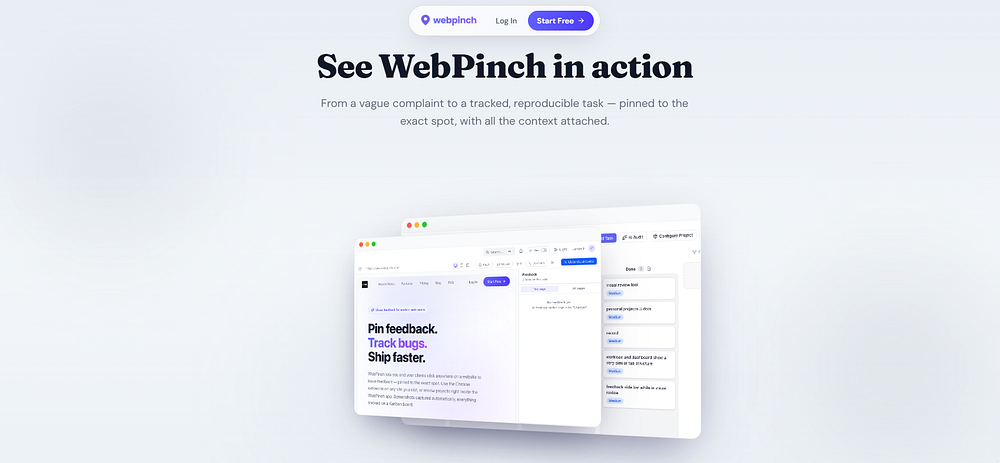
It started with a message we’ve seen too many times: “There’s something wrong with the website. Can you check?” The developer opened the website. The designer opened it too. The client was looking at the same screen. But everyone saw a different problem. The developer noticed a technical issue. The designer noticed spacing. The client simply felt that something “didn’t look right.”
Then the Feedback Started
“The button on the homepage doesn’t look right.” “Which button?” “The one near the bottom.” Wrong button. “No, the other blue one.” There were three Then came screenshots, messages, screen recordings, and finally a meeting. A problem that should have taken two minutes to explain had already taken twenty. And the funny part? Everyone was still talking about the same website.
We Realized the Problem Wasn’t the Website
At WebPinch, we started noticing this pattern again and again. Teams weren’t necessarily struggling to find problems. They were struggling to explain problems clearly. A client might say: “This section feels too crowded.” A designer might interpret that as a spacing issue. A developer might think it means the section needs to be redesigned.A project manager might understand it as a request to remove some content. Four people. One sentence. Four different interpretations. And suddenly, a simple piece of feedback could turn into a long chain of messages. “What do you mean?” “Where exactly?” “Can you send a screenshot?” “Which version are you talking about?” “Is this on mobile or desktop?” The website wasn’t the communication problem. The distance between the feedback and the problem was.
So We Asked Ourselves a Simple Question
What if feedback didn’t have to be explained? What if you could simply point at the problem? Instead of saying: “The text in the second section on the homepage is slightly misaligned.” You could just click on the website and say: “This.” That idea became one of the things we wanted WebPinch to solve. We wanted teams to stop describing where something was and start showing where it was.
That’s Where WebPinch Comes In
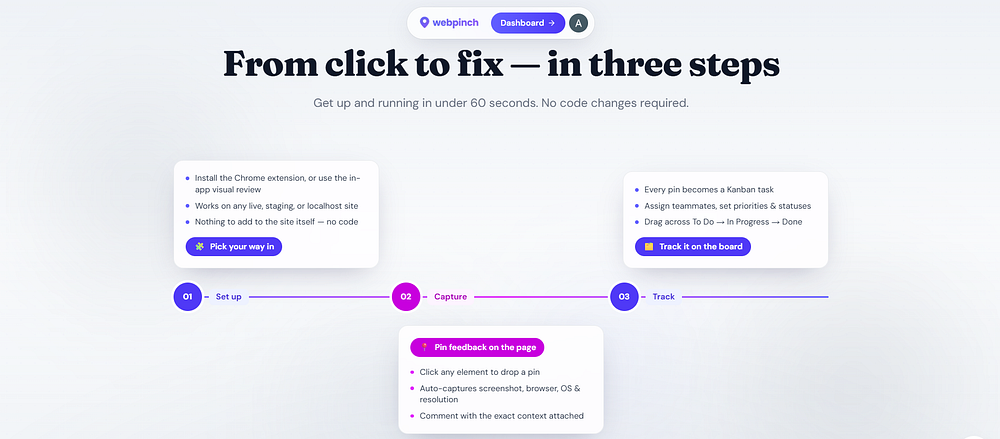
With WebPinch, feedback can live directly on the website. See something that needs to change?Pin it. to report a bug? Pin it.Notice something that doesn’t look right? it. Instead of sending a long message trying to describe the location, teams can attach feedback directly to the exact part of the website they’re talking about. Now the developer doesn’t have to guess. The designer doesn’t have to interpret. The client doesn’t have to write a paragraph explaining where they clicked. Everyone can look at the same thing. And finally, everyone is talking about the same problem.
From “What Do You Mean?” to “Got It.”
This small change can completely change how a website team works. Before: Client: “The header doesn’t look good.” Designer: “What exactly feels wrong?” Client: “The top part.” Developer: “Do you mean the navigation?” Client: “Yes, but not exactly.” Twenty minutes later, everyone is on a call. With visual feedback: Pin. Comment. Done. The conversation becomes shorter because the context is already there.
And Feedback Isn’t the Only Thing That Gets Easier
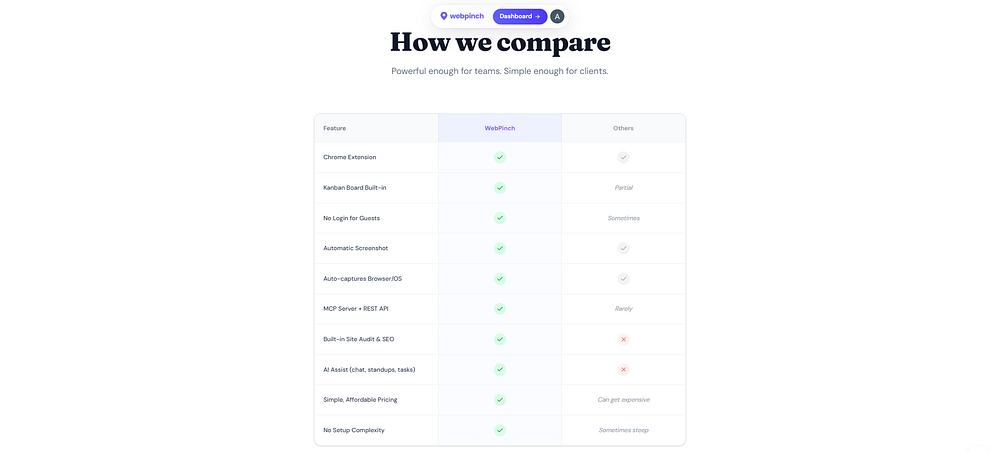
Once feedback becomes visual, the entire workflow becomes easier to follow. Teams can keep track of:
Website feedback
Design changes
Bugs
Tasks
Client comments
Fixes that still need attention
Instead of feedback being scattered across emails, chats, screenshots and meetings, it can become part of one clear workflow.
See it. Pin it. Fix it. Ship it.
Because Great Websites Are Built by Teams That Understand Each Other
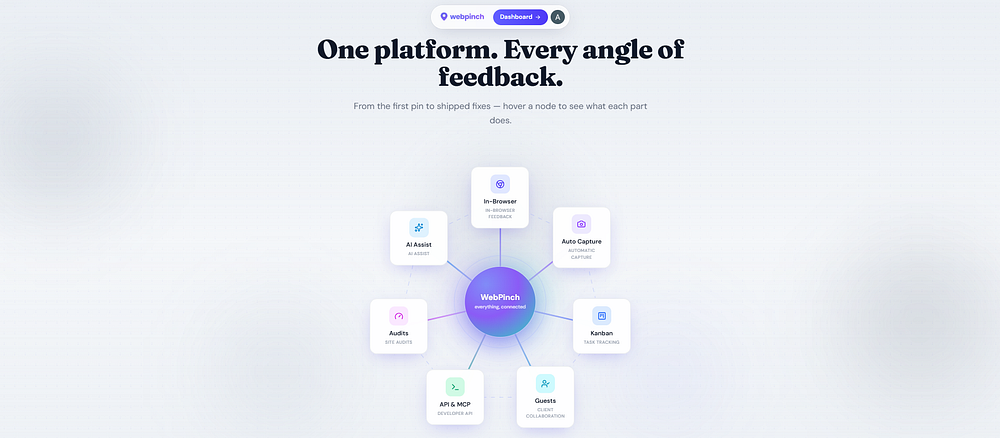
A website isn’t built by one person. There are developers writing code. Designers creating experiences. Clients sharing ideas. Project managers keeping everything moving. Everyone has a different way of looking at the same website. That’s normal. The problem starts when those different perspectives create different interpretations of the feedback. We built WebPinch because we believe communication shouldn’t slow down good work. You shouldn’t need five messages to explain where a problem is. You shouldn’t need a meeting for something that could be pointed out in seconds. And you definitely shouldn’t have to ask: “Which part are you talking about?”
The Website Was Never the Real Problem
Looking back, we realized something. Most teams don’t need more meetings. They don’t need longer feedback messages. They don’t need another place to copy and paste screenshots. They simply need a better way to connect feedback with context. That’s what WebPinch is built for. Because when everyone can see exactly what everyone else is talking about, feedback becomes clearer, work moves faster, and teams spend less time explaining…and more time building.
Same website. Same problem. Same understanding.
That’s the idea behind WebPinch.
Try WebPinch free
Pin feedback on any website, capture screenshots automatically, and track everything on a Kanban board.